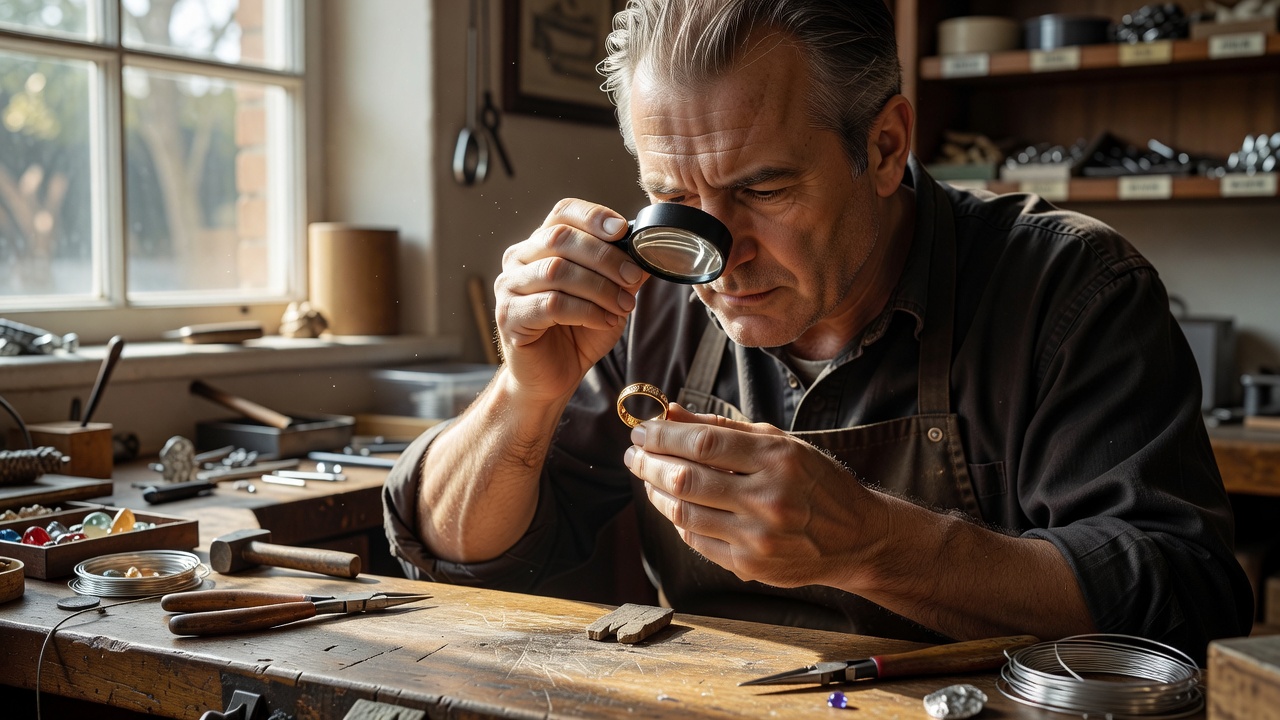
Make the image record before the interpretation
Begin with an overall view on a plain, neutral surface. Photograph the front, reverse, both sides and fastening without changing the object. Add separate images of inscriptions, settings, joins and damaged areas. Keep the original files, including the unedited wider view around every close-up. A tiny crop can make a convincing shape while concealing where that shape belongs.
Use soft window light rather than direct sunlight. A supported camera and a short timer often help more than additional digital zoom. Make several exposures with the light coming from different directions, keeping the object secure. Reflections can conceal a letter or manufacture the appearance of a line. Do not scrape dirt from a recess to make a stamp legible; ask a conservator if cleaning may affect a fragile surface.
Record dimensions separately, preferably with a scale beside rather than on top of the jewellery. Perspective can distort measurements, so distinguish a photographed estimate from a measurement taken with suitable equipment. Note who made the photographs and whether you have handled the object yourself. A seller’s photograph and your own observation are different kinds of evidence.
Describe a stamp before identifying it
Write down the location, outline and orientation of each mark. Then record only the characters you can genuinely distinguish: “possibly 5 or S” is more useful than a confident but unsupported transcription. Note whether the stamp is complete, worn, partly hidden by a setting or interrupted by a repair. Several adjacent punches may belong to different categories rather than form a single maker’s name.
A British hallmark can include information associated with a sponsor, fineness and assay office; the combination depends on the period and applicable rules. A sponsor’s mark does not automatically identify the person who physically made the item. Date letters require the correct office and cycle. Marks from other jurisdictions follow different systems, and an unmarked object is not automatically either old or counterfeit.
For British examples, consult official guidance from the London Assay Office, Birmingham Assay Office, Sheffield Assay Office or Edinburgh Assay Office. The British Hallmarking Council provides useful consumer context. For cross-border marks, the Convention on the Control and Marking of Articles of Precious Metals is another relevant reference. Match the full punch, not merely a familiar animal or letter.
Enlargement is not recovered evidence
Cropping can make an existing feature easier to inspect. Adjusting exposure may reveal a detail already recorded. Neither operation restores information the camera failed to capture. Generative upscaling is particularly risky: it can invent plausible edges, characters and surface texture. Keep enhanced derivatives clearly labelled and compare every proposed reading against the untouched original.
Optical character recognition and multimodal AI can offer possible transcriptions, but jewellery stamps are unusually difficult subjects. Curved surfaces, tiny punches, wear and specular reflections differ from ordinary printed text. Ask a tool to list ambiguities rather than deliver a verdict. If two readings remain possible, retain both and request another photograph. Agreement between several tools is not independent physical verification.
Compare framing, not authenticity
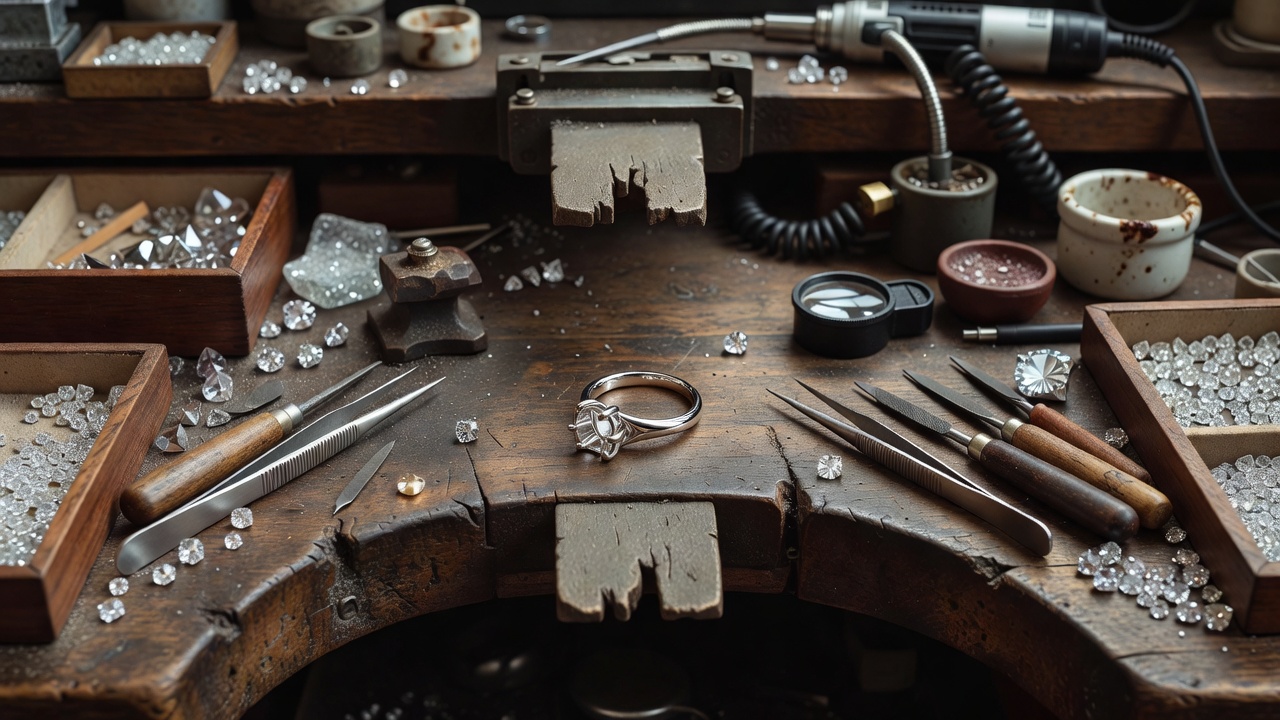
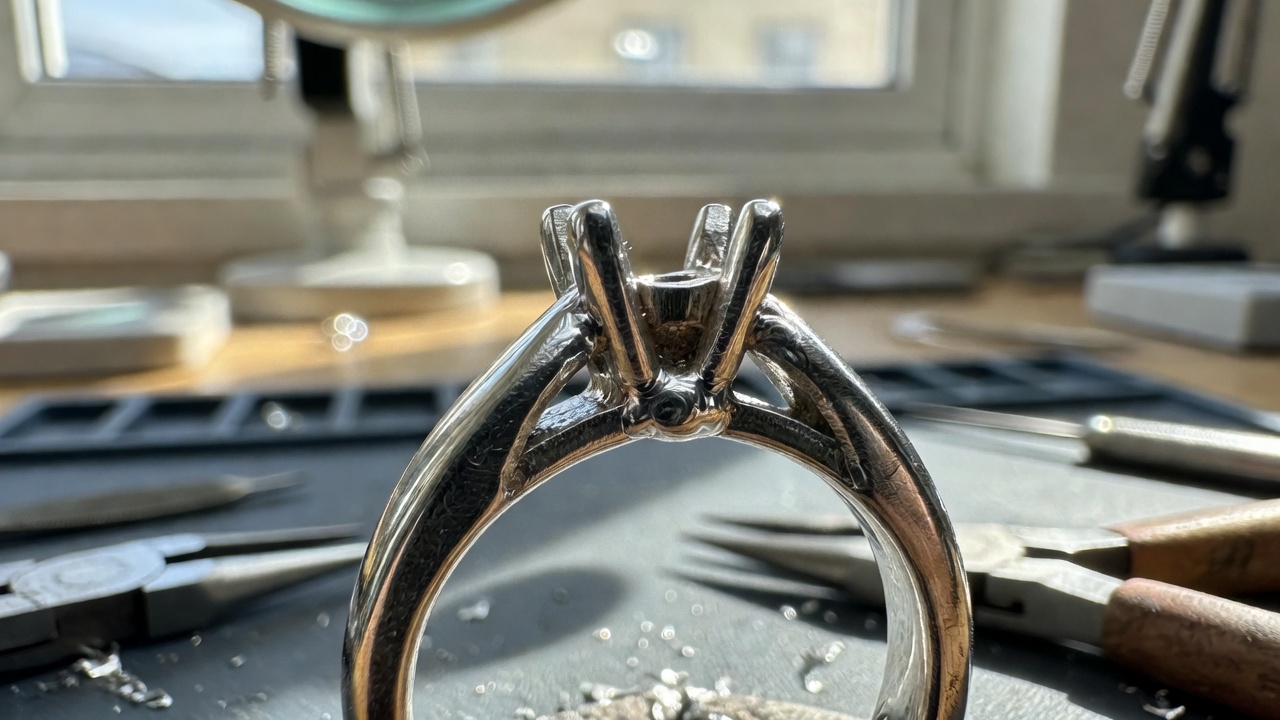
Move the divider between an overall setting view and a closer detail of the same examination. These are photographic views, not an AI restoration or an age test.
End with a bounded observation
A useful conclusion might read: “Three punches are visible inside the shank; the final character is unclear; a seam crosses the lower edge.” This separates the record from the hypothesis. A stamp alone cannot prove that every component is original, that the stone is natural or that the object has a documented ownership history.
Before buying, insuring or selling on the strength of a mark, ask a qualified examiner which claims can be supported physically. They may need microscopy, material testing and comparison with authoritative records. Bring the original photographs, all alternative readings and any seller description. A well-recorded uncertainty is not a failure; it tells the next examiner exactly where useful work can begin.
Evidence check: what would change this reading?
A sharper contextual photograph, a different lighting angle, an official punch reference or physical examination may change a transcription. A more confident AI answer, without new evidence, should not.